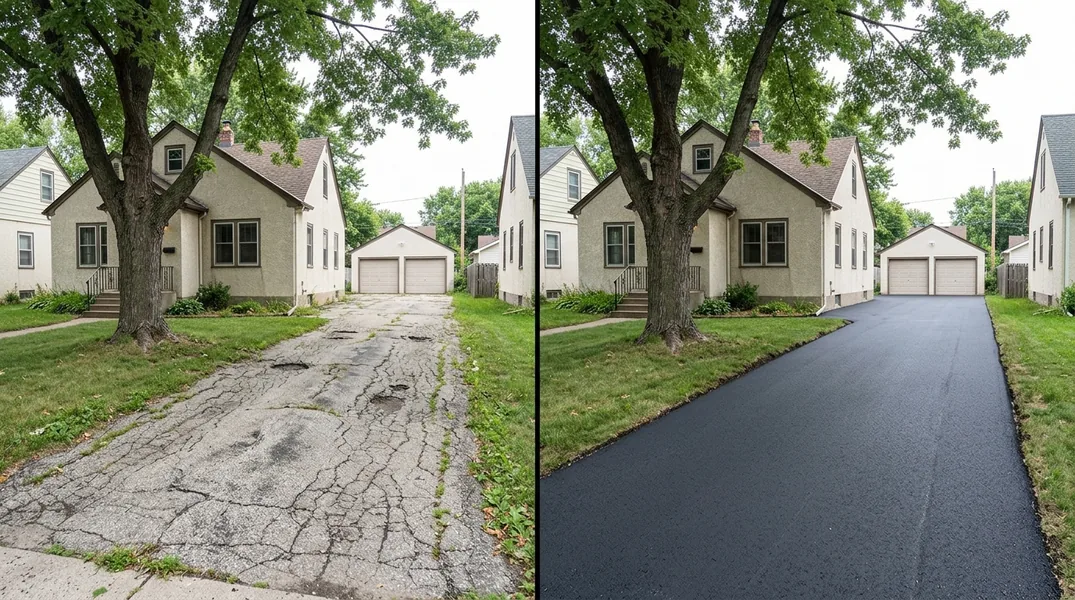
Signs Your Driveway Needs More Than a Patch
Every homeowner in Minneapolis eventually faces the question: is my driveway worth repairing, or should I start fresh? The answer depends on the extent of the damage and your driveway's age. Small cracks and isolated potholes are often perfect candidates for Pothole Repair & Asphalt Patching, but widespread deterioration tells a different story.
If you're seeing multiple cracks spreading across your driveway like a spider web, or if the surface has become uneven and sunken in places, these are red flags that patching won't provide a lasting solution. When asphalt reaches this stage of decline, it's typically because the base layer has begun to fail, and surface-level repairs won't address the root problem. Similarly, if your driveway is more than 15 to 20 years old and showing significant wear, replacement often makes more financial sense than continued patching. A professional inspection can help you understand exactly what your driveway needs.
Understanding How Long for Asphalt to Cure
One of the most common questions homeowners ask is about curing time. How long for asphalt to cure is crucial information if you're planning a new installation or resurfacing project. The answer isn't as simple as a single number because asphalt curing happens in stages, and several factors influence the timeline.
When fresh asphalt is laid, it begins cooling immediately. The surface may feel firm to the touch within a few hours, but this doesn't mean it's fully cured. During the first 24 to 48 hours, the asphalt continues to harden as it loses heat and moisture. However, the curing process actually continues for several weeks as the oils in the asphalt continue to oxidize and the material reaches its maximum strength and density. Weather plays a significant role in this process. Cooler temperatures slow curing, while warmer conditions accelerate it. In Minneapolis, where winters can be harsh, understanding seasonal curing times is especially important for planning your project timeline.
How Long Before You Can Drive on New Asphalt
The question of when you can drive on new asphalt is separate from complete curing, and it's one homeowners need answered quickly. How long before you can drive on new asphalt depends on several conditions, but generally, light traffic can resume after 48 to 72 hours. This assumes normal weather conditions and proper installation techniques.
However, this is just the minimum threshold. For the first week or two, it's wise to avoid heavy vehicles, parking in the same spot repeatedly, or making sharp turns that place excessive stress on the surface. The asphalt will continue to strengthen during this period, and subjecting it to heavy loads before it's ready can cause permanent damage like rutting or cracking. If you've just had your driveway installed or Asphalt Resurfacing & Overlay work completed, patience during the first few weeks will pay dividends in longevity. Your contractor should provide specific guidance based on weather conditions at the time of installation, as this significantly affects safe driving timelines.
New Asphalt Driveway Care: Your First Year Matters
New asphalt driveway care begins the moment installation is complete, and the habits you establish in that first year can extend your driveway's life by years. Many homeowners don't realize that proper maintenance immediately after installation is just as important as the quality of the work itself. Avoiding stress on the surface, keeping it clean, and protecting it from the elements are your primary responsibilities during this critical period.
During the first few weeks, avoid parking in the same location repeatedly, as this can create permanent depressions in the still-curing material. Keep the driveway clear of debris, and don't allow water to pool on the surface for extended periods. If you notice any small cracks beginning to form during the first year, address them immediately with a professional crack filler. This preventive approach stops water from seeping into the base layer, which is the primary cause of long-term asphalt failure. Many homeowners in the area have found that taking these early steps dramatically improves their driveway's performance through Minneapolis's freeze-thaw cycles.
How Often to Seal Driveway: A Maintenance Schedule That Works
Once your asphalt has fully cured (typically after 6 to 12 months), the next critical maintenance question is: how often to seal driveway? Seal coating is one of the most cost-effective investments you can make in driveway longevity. A quality seal coat protects the asphalt from UV rays, water penetration, and chemical damage from road salt and oil spills. Most experts recommend seal coating every 2 to 3 years, though the exact interval depends on your local climate and traffic volume.
In Minneapolis, where winters are severe and road salt is commonly used, seal coating becomes even more important. The salt accelerates deterioration of unprotected asphalt, so maintaining a fresh seal coat every 2 to 3 years is a smart investment. Some homeowners delay seal coating because they see it as an optional expense, but this short-term savings often leads to expensive repairs or early replacement down the road. A professional seal coating service typically costs a fraction of what Driveway Repair or replacement would cost, making it one of the best preventive measures available.
Making the Patch vs. Replace Decision: Get a Professional Assessment
Ultimately, the decision between patching and replacing your driveway should be based on a professional assessment of your specific situation. Factors like the driveway's age, the extent of damage, the condition of the base layer, and your long-term plans for the property all play a role. A contractor with experience in Asphalt Driveway Paving & Installation can evaluate your driveway and provide honest recommendations without pressure to oversell you on work you don't need.
If you're in the Minneapolis area and uncertain about your driveway's condition, Minneapolis Asphalt Paving offers a free estimate to help you understand your options. You can reach the team at (952) 206-5214 to schedule an inspection. Whether your driveway needs targeted patching or a complete replacement, making an informed decision now will save you money and frustration in the years ahead. Don't let uncertainty about curing times, maintenance schedules, or repair costs keep you from taking action. A simple conversation with a professional can clarify exactly what your driveway needs and what to expect moving forward.
Looking for a professional asphalt paving contractor in Minneapolis? Minneapolis Asphalt Paving responds fast for all your asphalt paving needs.
Get a Free Quote