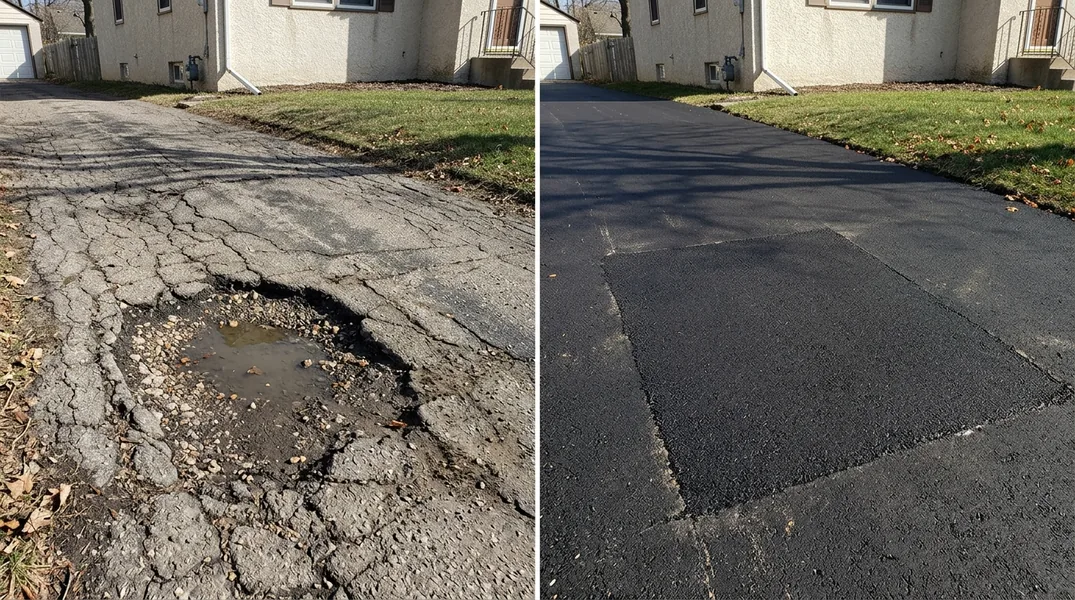
Understanding Frost Heave and Spring Damage
When spring arrives in Minneapolis, homeowners often discover unexpected damage to their driveways. Frost heave, the upward swelling of soil caused by expanding ice beneath the surface, is one of the most common culprits. During Minnesota's harsh winters, water in the soil freezes and expands, pushing the asphalt upward. When temperatures rise and the ice melts, the ground settles unevenly, leaving your driveway cracked, buckled, or sunken in places.
Potholes form through a similar process. Water seeps into small cracks in the asphalt, freezes during winter, and expands. As vehicles drive over the weakened area, chunks of asphalt break away, creating those frustrating holes. The freeze-thaw cycle that Minneapolis experiences year after year makes pothole formation nearly inevitable without proper maintenance and repairs. Understanding these natural processes helps you recognize why spring inspections are so critical for your driveway's health.
How to Inspect Your Driveway After the Spring Thaw
Once the snow melts and temperatures stabilize, take time to walk your entire driveway and look for visible signs of damage. Start by checking for areas where the surface has heaved upward, creating noticeable bumps or ridges. These rough spots aren't just uncomfortable to drive over; they indicate that the base layer beneath your asphalt may have shifted. Look for new cracks, especially alligator cracking (a pattern of interconnected cracks resembling scales), which suggests structural failure underneath.
Pay special attention to low spots where water tends to pool. Standing water is a red flag because it will continue to infiltrate the asphalt, accelerating deterioration. Check the edges of your driveway where the asphalt meets the lawn or curb, as these areas are particularly vulnerable to frost heave. Don't ignore small potholes either. A pothole that's only a few inches across today can become a major problem within weeks if left untreated. If you notice significant damage, it's time to reach out for professional assessment and free estimate from a qualified contractor.
Pothole Repair and Temporary Fixes: What Works and What Doesn't
Pothole Repair & Asphalt Patching is one of the most common services needed after spring thaw in the Minneapolis area. When a pothole appears, you might be tempted to fill it yourself or hire the cheapest contractor who offers quick fixes. However, not all repairs are created equal. Temporary patching methods, like throwing loose asphalt into a hole without proper compaction or base preparation, will fail within weeks. The patch will sink, crack, and the pothole will return larger than before.
Professional Pothole Repair & Asphalt Patching involves cleaning out the damaged area, preparing the base, and applying hot-mix asphalt with proper compaction. This ensures the repair lasts and prevents water from re-entering the area. If your driveway has multiple potholes scattered across its surface, it may be more cost-effective to consider Asphalt Resurfacing & Overlay rather than patching individual spots. A professional contractor can assess whether spot repairs or full resurfacing makes the most sense for your situation.
Avoiding Driveway Paving Scams and Leftover Asphalt Schemes
Spring is peak season for driveway scams, and homeowners need to stay vigilant. One common scheme involves contractors claiming to have leftover asphalt from a nearby job and offering to pave your driveway at a steep discount. This leftover asphalt scam preys on the desire for bargain pricing, but the asphalt is often recycled material of poor quality, improperly mixed, or applied without adequate base preparation. The result is a driveway that fails within one to two years, leaving you with an expensive problem and no recourse.
Other driveway paving scams include contractors who demand full payment upfront, fail to pull proper permits, use substandard materials, or disappear mid-project. To protect yourself, research any contractor thoroughly before hiring. Check for valid licensing, insurance, and references from previous customers. Be wary of door-to-door solicitation or unsolicited calls offering special deals. Legitimate contractors like Minneapolis Asphalt Paving build their reputation on quality work and customer satisfaction, not quick cash grabs. If an offer sounds too good to be true, it almost certainly is.
Questions to Ask Your Paving Contractor Before Hiring
Knowing what questions to ask a paving contractor is your best defense against poor work and inflated costs. Start by asking how long they've been in business and request references from customers in your area. Ask about their licensing, bonding, and insurance coverage. Verify that they're insured for both general liability and workers' compensation. Request a detailed written estimate that breaks down labor, materials, equipment, and any site preparation costs. This transparency helps you compare quotes fairly and understand where your money is going.
Ask the contractor what base preparation they'll perform and what type of asphalt mix they'll use. Will they remove and replace damaged base material, or simply overlay new asphalt over existing problems? For Asphalt Driveway Paving & Installation, understanding the scope of work is critical. Ask about warranty coverage and how long they guarantee their work. Ask if they'll handle permitting and inspections. Finally, ask about their timeline and whether they'll protect your landscaping and property during the project. A reputable contractor will answer all these questions clearly and provide everything in writing.
When to Choose Repair vs. Replacement: Understanding Your Options
After inspecting your driveway, you'll need to decide between Driveway Repair and full replacement. If your driveway is less than 15 years old and damage is limited to a few potholes or minor cracks, targeted repairs make sense. However, if you're seeing widespread cracking, multiple potholes, significant heaving, or areas where the base has failed, Asphalt Resurfacing & Overlay or full replacement may be more economical in the long run. A thin overlay adds a new wearing surface over existing asphalt, while replacement removes everything and installs a completely new driveway with proper base preparation.
The best way to make this decision is to have a professional assess your driveway's condition. Contact Minneapolis Asphalt Paving at (952) 206-5214 or request a free estimate to discuss your options. A thorough evaluation will reveal whether your driveway can be salvaged with repairs or if investment in resurfacing or replacement will provide better value over time. Don't let spring damage linger. The sooner you address frost heave and pothole damage, the less expensive your repairs will be.
Looking for a professional asphalt paving contractor in Minneapolis? Minneapolis Asphalt Paving responds fast for all your asphalt paving needs.
Get a Free Quote